
The Count of Monte Cristo
The Count of Monte Cristo (French: Le Comte de Monte-Cristo) is an adventure novel by French writer Alexandre Dumas, written with his collaborator Auguste Maquet. It first appeared as a serial in the Paris newspaper Journal des Débats from 28 August 1844 to 15 January 1846, and was published in book form in 1846. The book is usually classified as a historical novel or a "historical thriller": Dumas places fictional characters against the turbulent backdrop of Restoration France and the July Monarchy, turning real political conflicts and social codes into the engine of a large-scale revenge drama. The narrative moves from the glittering salons of Paris to the sun-scorched Mediterranean, from the depths of a prison fortress to the secret caves of a small island, creating a world at once romantic and ruthless.
The story opens in Marseille in 1815. Edmond Dantès, a competent young sailor, is about to be made captain and to marry the beautiful Mercédès. Out of jealousy, ambition, and fear, his shipmate Danglars, his rival Fernand, and the prosecutor Villefort conspire to denounce him as a Bonapartist. Dantès is arrested at his wedding feast and locked away without a proper trial in the Château d'If. In prison he meets the Abbé Faria, an Italian priest and scholar, who teaches him languages, science, and history, and who reveals the hiding-place of a vast treasure on the island of Monte Cristo. When Faria dies, Dantès escapes, secures the treasure, and transforms himself into the mysterious and wealthy "Count of Monte Cristo." From this vantage point he enters Parisian high society and systematically brings down Danglars, Fernand, and Villefort, each through a carefully tuned punishment suited to their vices. Yet the revenge exacts a moral price, and Dantès must learn that justice without mercy can poison the avenger as well.
The central themes of the novel are hope, justice, vengeance, mercy, and redemption. Dantès begins as an innocent victim and becomes both an agent of justice and a figure of ambiguous power. The motif of waiting and hoping, embodied in Faria's famous maxim, runs through the entire narrative. Dumas drew not only on the political memories of the Napoleonic era but also, indirectly, on the life of his own father, General Thomas-Alexandre Dumas, a hero of the Revolutionary Wars who was imprisoned and abandoned by his country. That family history gives the story an emotional charge that goes beyond melodrama.
The Count of Monte Cristo was an immediate success and has remained a staple of popular literature. It has been translated into dozens of languages and has inspired hundreds of stage, film, television, and comic-book adaptations. It cemented Dumas's reputation as the "king of popular fiction," alongside The Three Musketeers. When Dumas was reburied in the Panthéon in Paris in 2002, it was largely in recognition of works like this one. For modern readers, the novel remains a dazzling fable about how suffering can shape a human being, and about the dangerous line between retribution and healing.
The novel's reception and legacy have been profound since its original serialization in the Journal des Débats in 1844. Carlos Javier Villafane Mercado noted the electrifying effect the work had on European readers. Its popularity in China is particularly notable: the first Chinese translation appeared in 1907, and the novel was a personal favorite of Jiang Qing. A 1978 translation became one of the first foreign novels to gain mass popularity in mainland China after the Cultural Revolution, and since then over twenty additional Chinese translations have been published. The book has also spawned a number of spurious sequels, including the 1853 work The Hand of the Deceased, originally published in Portuguese and French and falsely attributed to Dumas but actually written by Alfredo Possolo Hogan.
About the Author
Alexandre Dumas, born Dumas Davy de la Pailleterie on July 24, 1802, in Villers-Cotterêts, Picardy, was one of France's most prolific and widely read writers. His father, Thomas-Alexandre Dumas, was a celebrated general in the French Revolutionary Wars and the son of a French marquis and an enslaved Black woman, Marie Césette Dumas; the surname "Dumas" was adopted from his grandmother. General Dumas died of cancer in 1806, leaving the family poor. The young Alexandre educated himself through voracious reading, including Robinson Crusoe, and began his working life as a clerk in a notary's office. After moving to Paris in 1823, he found employment in the household of the Duke of Orléans and wrote plays in his spare time. His first major success, Henri III and His Court, was staged in 1829 and was celebrated by Hugo and the Romantic circle. More plays followed, including Christine and Antony, and Dumas also joined the July Revolution of 1830.
In the 1840s, with the serial novel at its peak, Dumas collaborated with Auguste Maquet to produce his two immortal novels: The Three Musketeers (1844) and The Count of Monte Cristo (1844–1846). He followed these with Twenty Years After and The Vicomte de Bragelonne, completing the Musketeers cycle. He wrote around four hundred volumes and created tens of thousands of characters, earning the title "king of popular fiction." His private life was as flamboyant as his fiction: with Catherine Labay he had an illegitimate son, also named Alexandre, who became the author of The Lady of the Camellias and was later legally acknowledged. Dumas married Ida Ferrier in 1840. A committed republican, he took part in the revolutions of 1830 and 1848, and later joined Garibaldi's campaign against the Kingdom of Naples.
Dumas died on December 5, 1870, in the department of Seine-Maritime, France, at the age of 68. For a long time, critics treated him as a merely commercial writer, but his works never lost their audience. In 2002, his remains were moved to the Panthéon in Paris, where he now rests among France's most honored cultural figures. His novels have been translated into dozens of languages and repeatedly adapted for stage, film, and television. Today the name Alexandre Dumas remains synonymous with adventurous storytelling, quick-witted dialogue, and the enduring power of popular literature.
StoryFlow
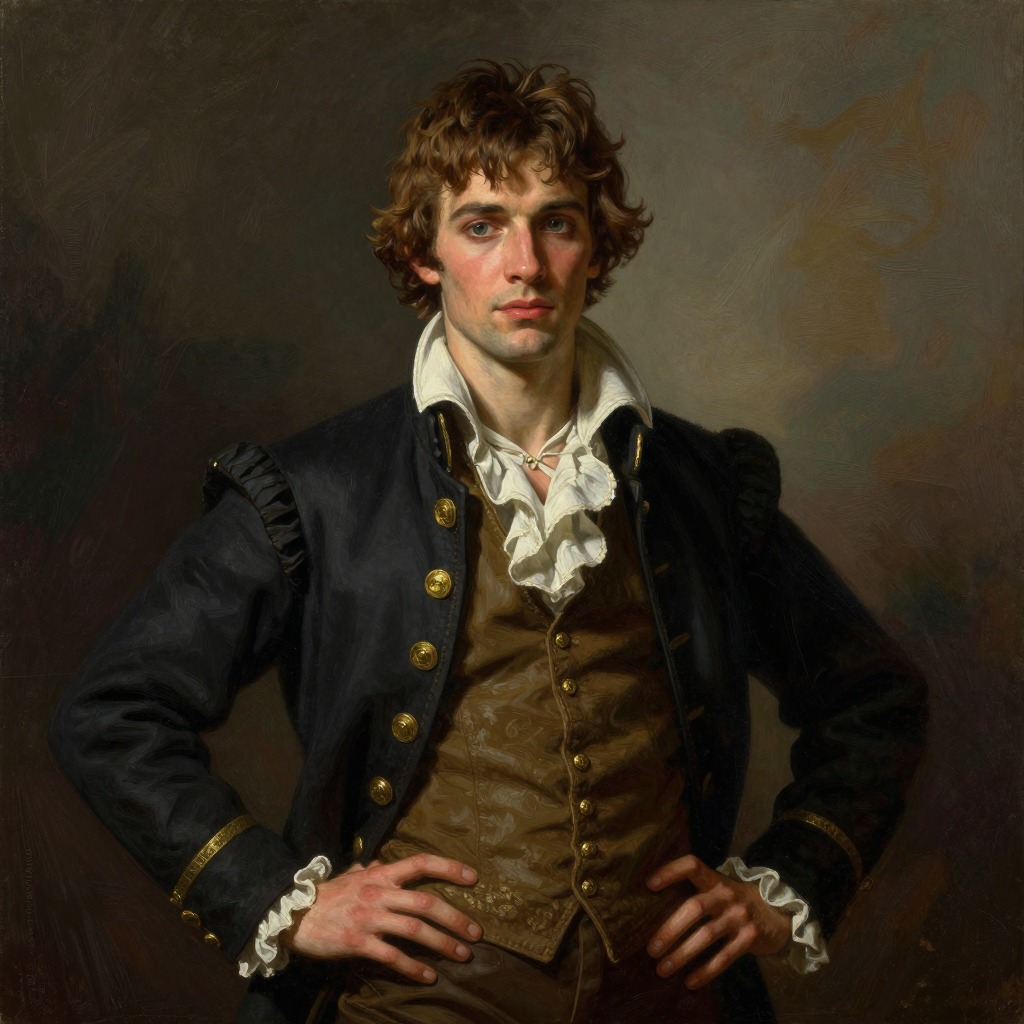
Edmond Dantes' Transformation from Sailor to Count
Traces Edmond Dantes' journey from a naive young sailor to the vengeful, sophisticated Count of Monte Cristo.

The Romance of Valentine and Maximilian
Traces the love story between Valentine de Villefort and Maximilian Morrel, which overcomes obstacles of family, poison, and death.
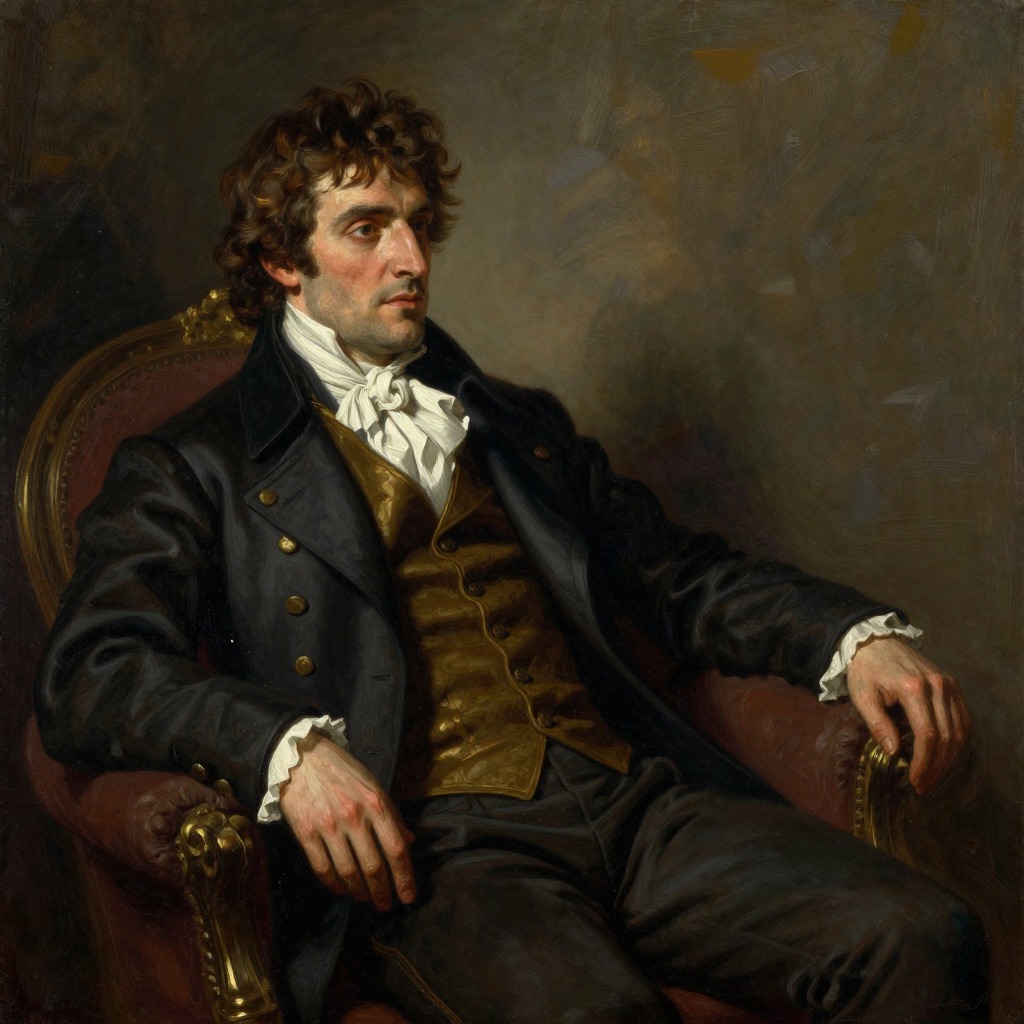
The Downfall of Villefort
Chronicles the moral and psychological destruction of the king's attorney, Gerard de Villefort.
